


National headlines this week, including CNBC's report "Home prices fall and rents rise, both for the first time in three years," describe the U.S. market as a whole. Here in Phoenix, the rental market is telling a different story. I think renters and would-be buyers in the Valley should know it, because it changes how I'd approach a lease renewal or a home search right now.
What the national headlines are saying
CNBC's October 29, 2026 story looks at the country as a whole: home prices easing and rents rising at the same time. That's a fair read of the national numbers. But real estate is local, and the Phoenix numbers are moving the other way on rent.
Phoenix rents are down from a year ago
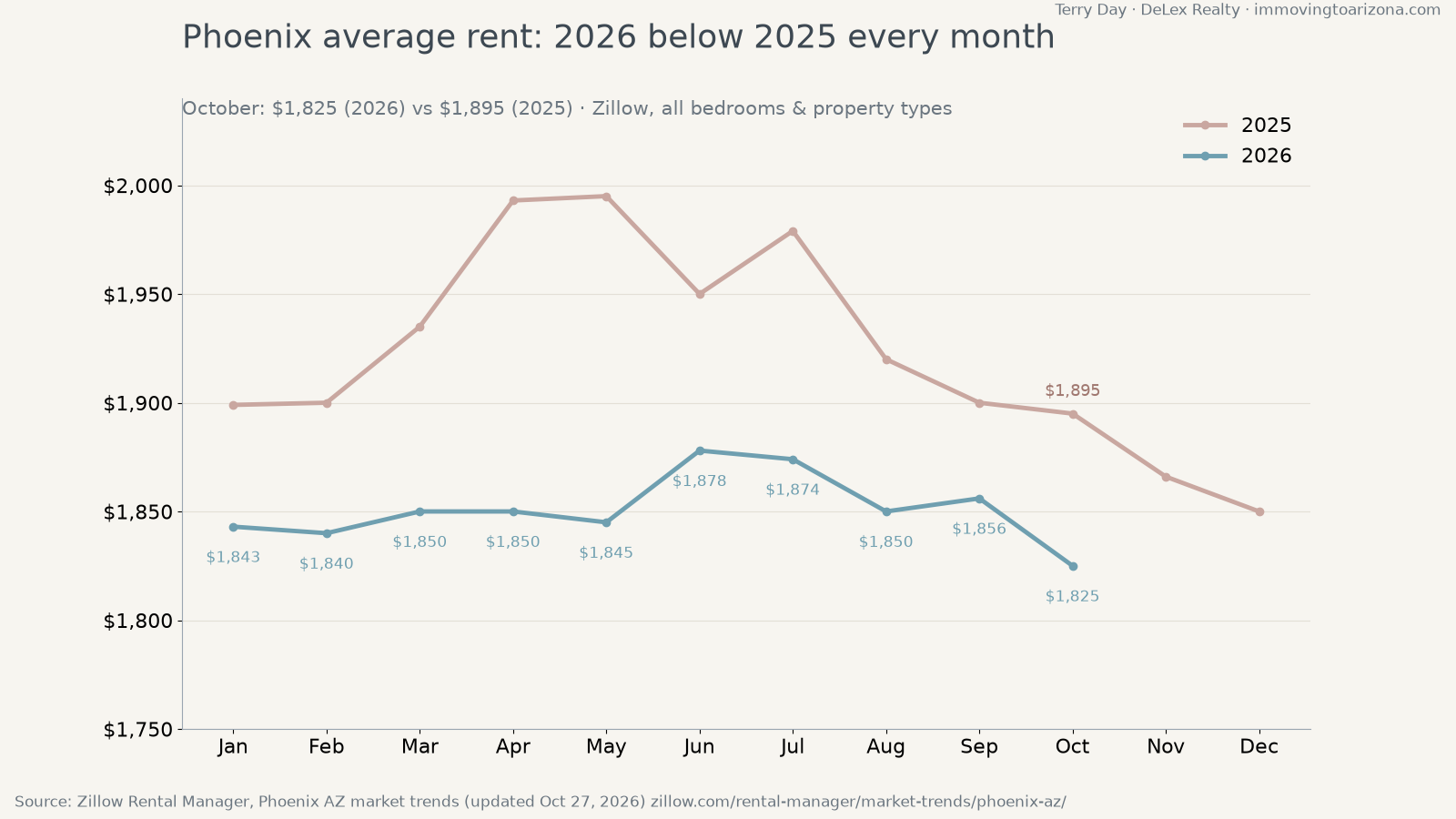
According to Zillow's Phoenix rental market trends, the average rent in Phoenix was $1,825 in October 2026, down from $1,895 in October 2025. Just as telling, every month of 2026 so far has come in below the same month of 2025. Zillow also showed 4,747 rentals listed in Phoenix, which means renters have more choices than they've had in a while.
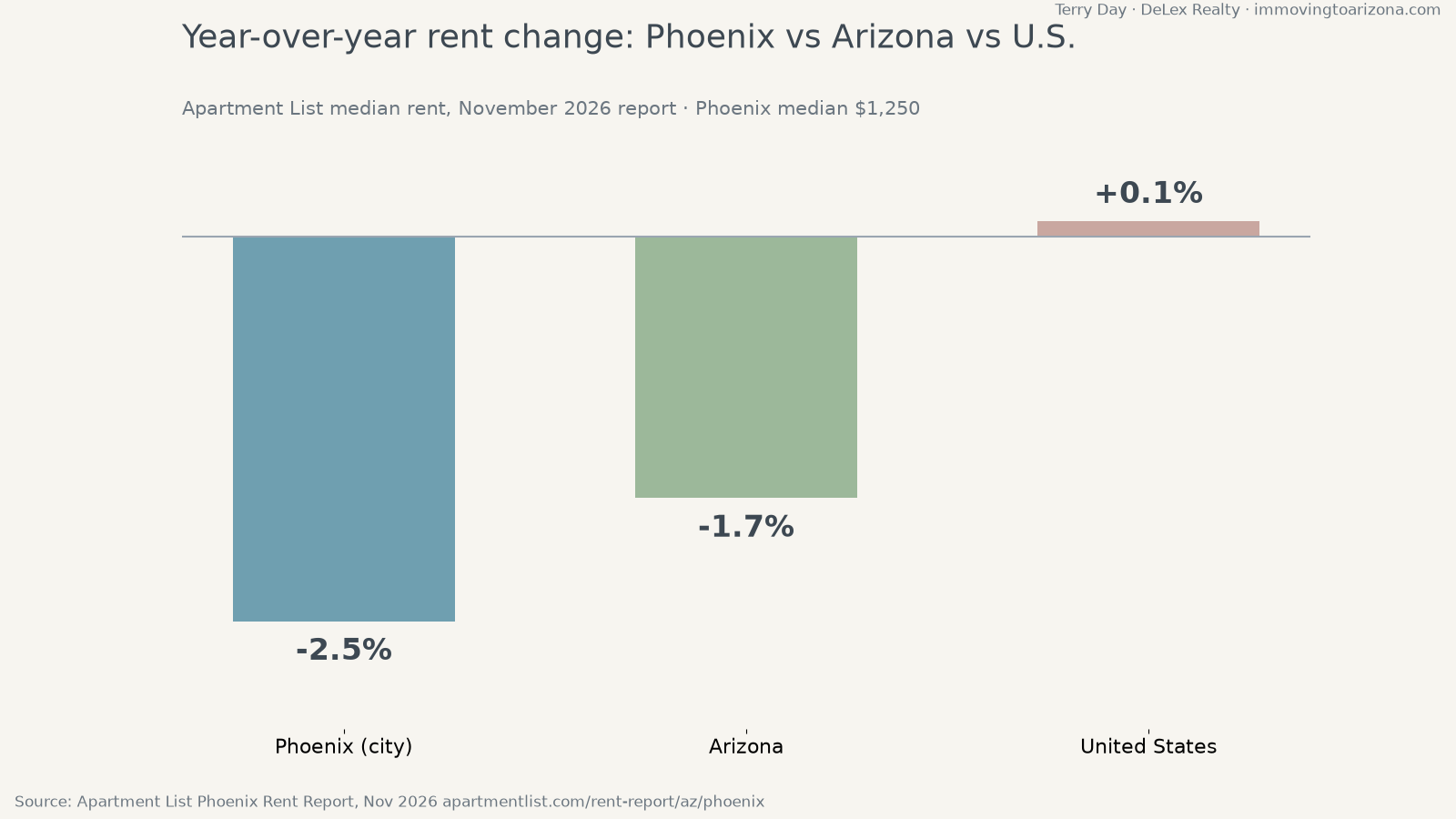
Apartment List measures rent a little differently, and it shows the same direction. Its Phoenix median rent is $1,250, down 2.5% year over year. Arizona as a whole is down 1.7%, while the U.S. is up 0.1%. Different methods, same story: Phoenix rents are softer than they were a year ago, while the national number is roughly flat to slightly up.
Why: a wave of new apartments
The main reason is supply. The Valley has had a large wave of new apartment construction over the last few years, and those buildings have been competing for tenants.
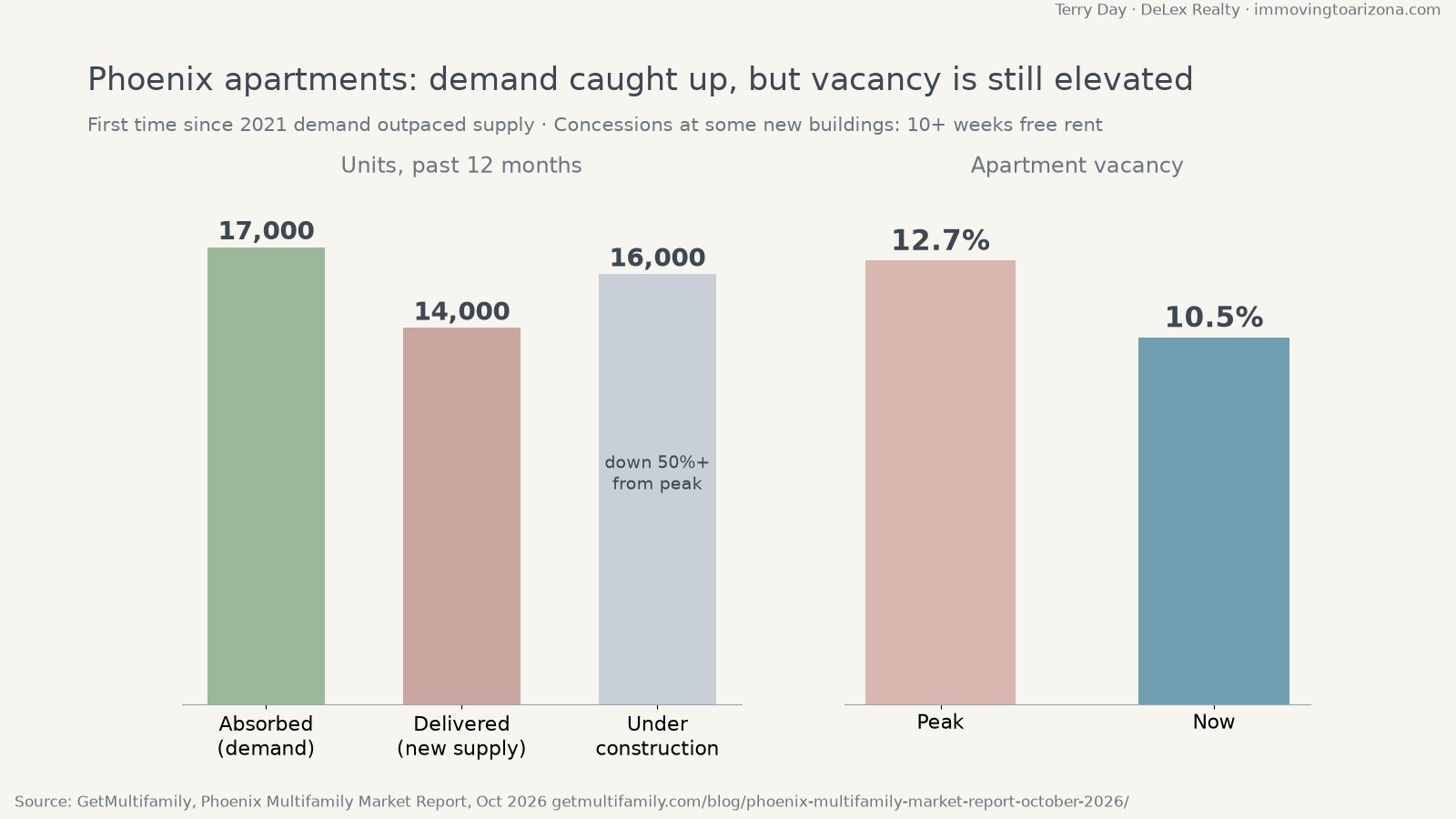
GetMultifamily's October 2026 Phoenix market report says the Valley absorbed about 17,000 apartment units over the past 12 months while about 14,000 new units were delivered. That's the first time since 2021 that demand outpaced new supply. Vacancy has come down from a 12.7% peak to 10.5%. That's an improvement, but 10.5% is still elevated, and it's why some new communities are offering 10 or more weeks of free rent to fill units. The same report puts roughly 16,000 units still under construction.
What I'd do as a renter right now
If you rent in Phoenix or Scottsdale, this is leverage, and I'd use it. Here's how I'd approach it:
- Ask every property about concessions. Free weeks, reduced deposits, waived fees. Many new buildings are competing hard.
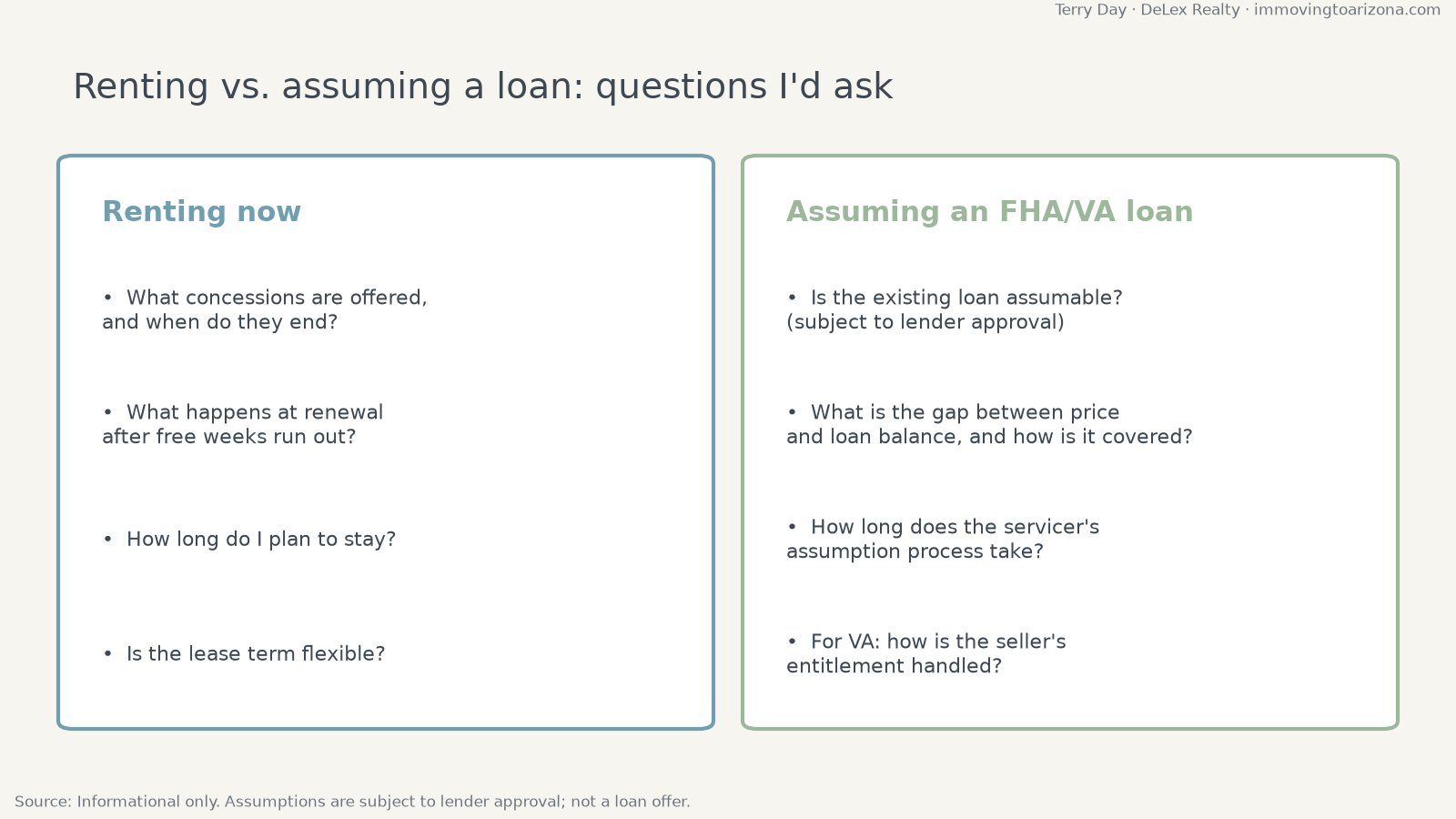
- Ask what renewal looks like. A concession is only as good as the rent you'll pay once it's gone. Ask what the renewal rent is likely to be after the free weeks end, and get the details in writing.
- Compare the effective rent, not just the sticker rent. Spread any free weeks over the full lease so you can compare apples to apples.
- Talk to your current landlord before you move. With more vacancy around, an existing property may prefer to keep a good tenant.
What I'd look at if you're thinking about buying
Some renters are using this moment to step back and ask whether buying makes sense. When I work with buyers, one path I look for is homes with assumable FHA or VA loans. An assumption lets a qualified buyer take over the seller's existing loan, subject to lender approval.
Assumptions aren't simple, and they aren't right for everyone. These are the questions I ask first:
- Is the loan actually assumable? Not every loan is. FHA and VA loans often are, but it has to be confirmed with the servicer.
- How will the gap be covered? The buyer generally needs to cover the difference between the purchase price and the remaining loan balance.
- How long will the servicer's process take? Assumptions can take longer than a typical closing, so the timeline needs to be planned for.
- On VA loans, how is the seller's entitlement handled? This matters to the seller and affects how the deal is structured.
Will this last?
I don't expect this much rental supply forever. GetMultifamily notes that construction is down more than 50% from its peak. As the current wave of buildings fills up and fewer new ones break ground, the concessions I'm seeing today may fade. That's why I think this is a window worth paying attention to, whether you plan to keep renting or start looking at homes.
Frequently asked questions
Are rents going down in Phoenix?
Yes, according to current data. Zillow shows the average Phoenix rent at $1,825 in October 2026, down from $1,895 in October 2025, and Apartment List shows Phoenix median rent down 2.5% year over year.
Why are Phoenix rents falling when national rents are rising?
The main reason is supply. The Valley delivered a large wave of new apartments, and vacancy peaked at 12.7% before coming down to 10.5%, according to GetMultifamily. That extra supply has pushed landlords to compete with lower rents and concessions.
What should I ask a landlord about move-in specials?
I'd ask what concessions are available, how they're applied, and what the renewal rent is likely to be once the concession ends. Get the details in writing.
What is an assumable mortgage?
An assumable mortgage lets a qualified buyer take over the seller's existing loan, subject to lender approval. FHA and VA loans are often assumable, but each one needs to be confirmed with the loan servicer.
Let's talk about your options
If you're comparing renting and buying in Phoenix or Scottsdale, I'm happy to walk through what's available. Call or text me at 602-483-4665.
Terry Day, Realtor, DeLex Realty. This article is general market information. Data as of October 29, 2026.
Sources
- CNBC, "Home prices fall and rents rise, both for the first time in three years": https://www.cnbc.com/2026/10/29/home-prices-fall-and-rents-rise-both-for-the-first-time-in-3-years.html
- Zillow, Phoenix rental market trends: https://www.zillow.com/rental-manager/market-trends/phoenix-az/
- Apartment List, Phoenix rent report: https://www.apartmentlist.com/rent-report/az/phoenix
- GetMultifamily, Phoenix multifamily market report, October 2026: https://www.getmultifamily.com/blog/phoenix-multifamily-market-report-october-2026/